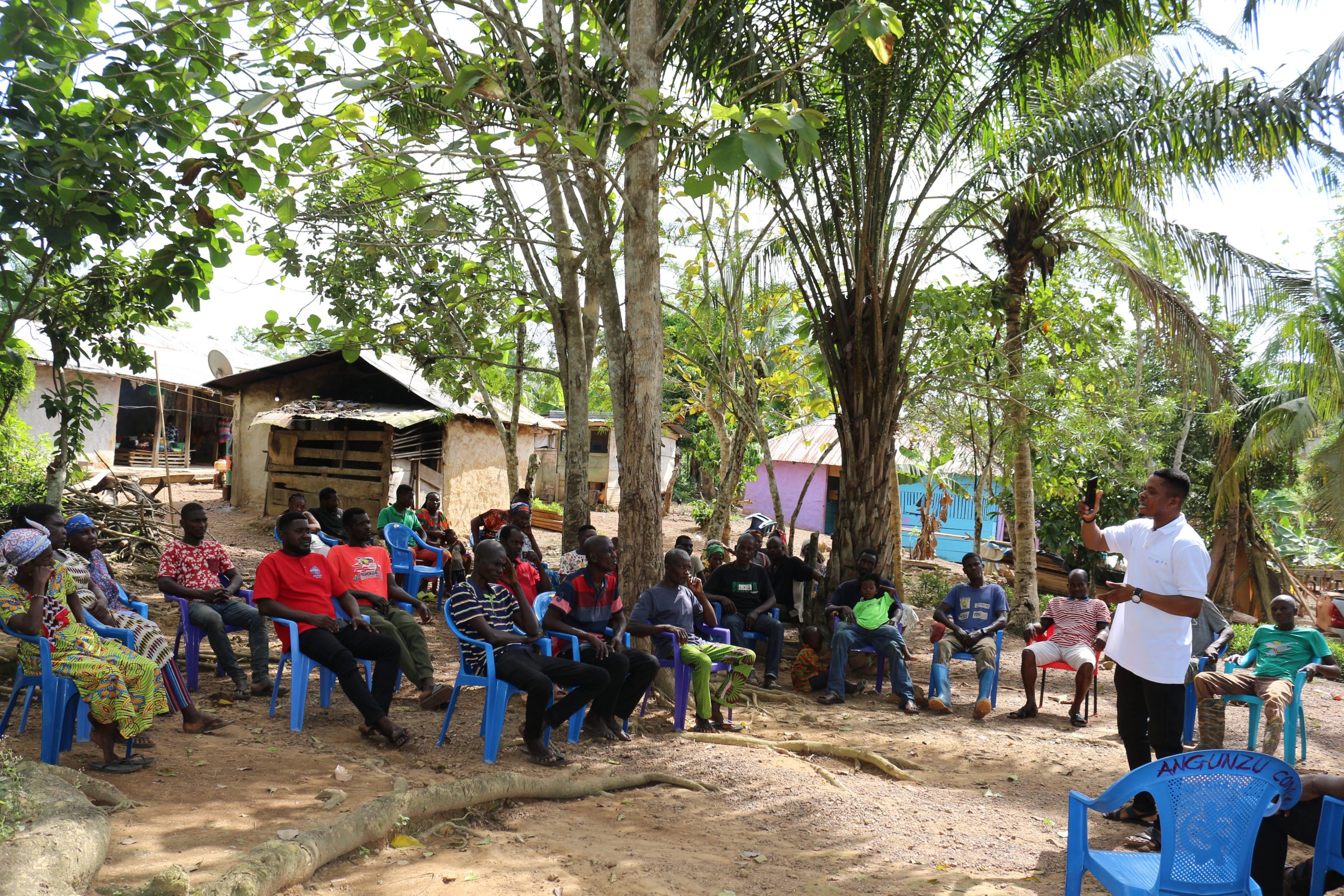
There are growing calls for the Forestry Commission of Ghana to increase the Social Responsibility Agreement paid to forest fringe communities from the current 5% to 20%.
This came to light during Civic Responses recent visit in February and March 2026 to 62 selected forest fringe communities spread over 12 forest districts in six (6) regions of Ghana. The regions are Western North, Western, Eastern, Ashanti, Bono and Ahafo.
Interactions with community members during open forums revealed that a number of these communities are no longer satisfied with the 5% SRA they received. They lamented that the amount involved is too small to undertake community infrastructural development at a pace and scale they desire.
Legally, communities within 5 kilometre radius of forests where logging is taking place are entitled to receive 5% of stumpage fees paid by timber companies to the FC as SRA. The SRA is to provide financial incentives to forest fringed communities (whether settler communities or indigenes) as an incentive for them to protect the forest resources around them.
Because the value of the SRA in financial terms is so small, communities are advised to use the money for projects that will benefit the entire community rather than sharing the money. Communities have since been following this advice. Forest fringe communities continue to use their SRA resources to support infrastructure development such as the construction of durbar grounds, schools, accommodation for local teachers or health workers, chips compounds and to provide portable water for the communities amongst others.
However, due to the limited funds available, these projects take years to complete. In the Gambia No. 1 community in the Asutifi North District of Goaso forest district in the Ahafo Region Goaso for instance, a 3-unit classroom block project which started in 2022 is yet to be fully completed after 3 years. Some projects even take longer to complete.
This has led to an increasing demand for SRA to be increased to 20%. The chief of Jeduakese in the Western Region, Nana Kofi Yeboah ll, is one of the advocates. According to him, he has even initiated discussions with the FSD in his area to this effect and is calling on others including Civil Society Organisations to support this call. Nana Kofi Yeboah ll is a member of a committee set up by FSD to oversee forestry issues in the Asankragwa forest district.
Some communities are even beginning to reject the SRA outright. In the Banka community in the Oda Forest District for instance, the queen mother of the area refused to sign the SRA document stating that the amount involved was too small.
The communities also noted that when you compare the huge amount mining companies pay to communities they operate in and what communities receive as SRA from timber companies, they are not motivated enough to continue to protect their forest resources. And that it was time to review the SRA percentage paid to forest fringe communities upward.
Source: Civic Response